
Chiropractor for Scoliosis in Kingsport, TN
Scoliosis is a sideways curve of the spine, usually with some rotation. Most cases are found between ages 10 and 15 and have no known cause (adolescent idiopathic scoliosis). Here's the honest part up front: chiropractic care does not straighten a structural curve. What it can do is screen for curves, track them over time, ease the muscle tightness and stiffness that often come with them, and make sure the right curves get to a specialist at the right time. That's how Dr. Preston Douglas, DC, CCSP (Tennessee License #3451) approaches scoliosis at Elevate Sport and Spine in Kingsport.
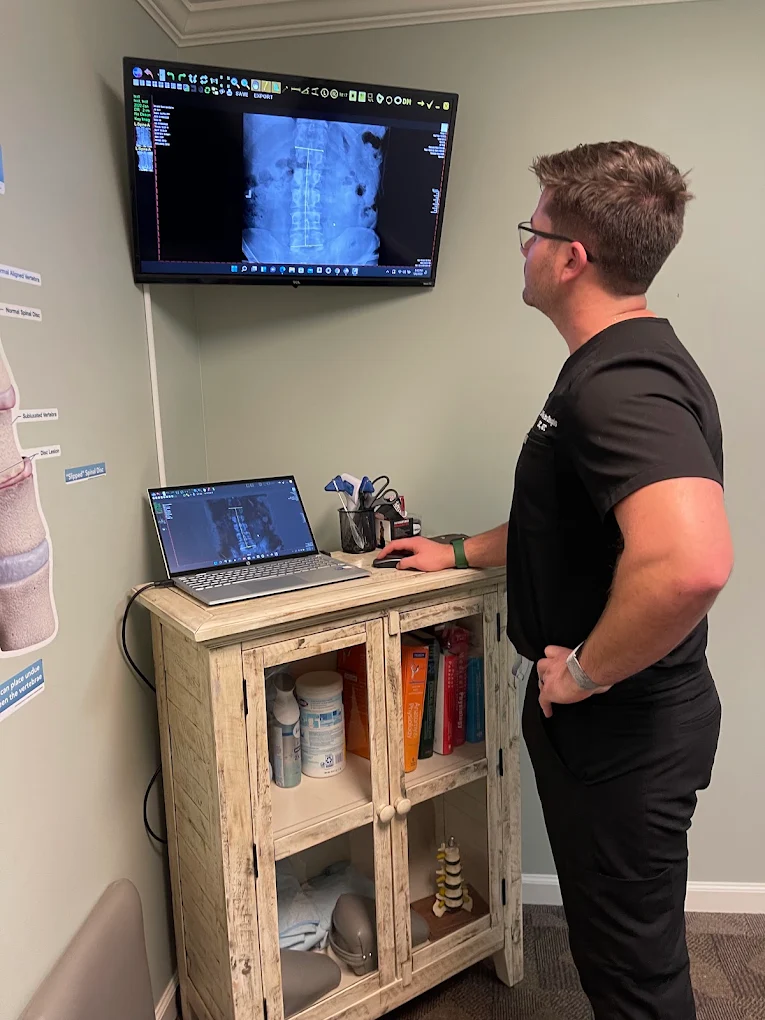
What is scoliosis?
Curves are measured in degrees on an X-ray (the Cobb angle). A curve of 10 degrees or more counts as scoliosis. Small curves are common and many never progress. The risk of progression is highest while a child is still growing, which is why timing matters.
| Curve size (growing child) | Usual approach |
|---|---|
| Under about 20 to 25 degrees | Monitor every few months during growth; exercise and posture work for comfort |
| About 25 to 40 degrees | Bracing is usually considered, managed by an orthopedic spine specialist |
| Over about 45 to 50 degrees | Surgery may be discussed with a spine surgeon |
These are general ranges; a specialist makes the call for each child.
A major trial in the New England Journal of Medicine showed bracing lowers the chance of a curve progressing to the point where surgery is recommended.
What chiropractic care can and can't do
It can:
- ●Screen for scoliosis and measure a curve on X-ray (on site)
- ●Monitor curves over time and catch progression early
- ●Ease back stiffness and muscle tightness with gentle adjustments, soft tissue work and stretching
- ●Teach exercises for posture, trunk strength and comfort (corrective exercise)
It can't:
- ●Straighten or reverse a structural curve
- ●Replace bracing or surgery when those are recommended
Any provider promising to "correct" scoliosis with adjustments alone is promising more than the evidence supports.
After a school screening
If your child was flagged at a school screening, the next step is an exam and, usually, an X-ray to measure the curve. Dr. Douglas does the forward-bend test, checks shoulder, rib and hip symmetry, asks about growth and family history, and takes X-rays on site if they're warranted. Curves that are larger or progressing are referred to a pediatric orthopedic spine specialist. More on caring for kids: pediatric chiropractic.
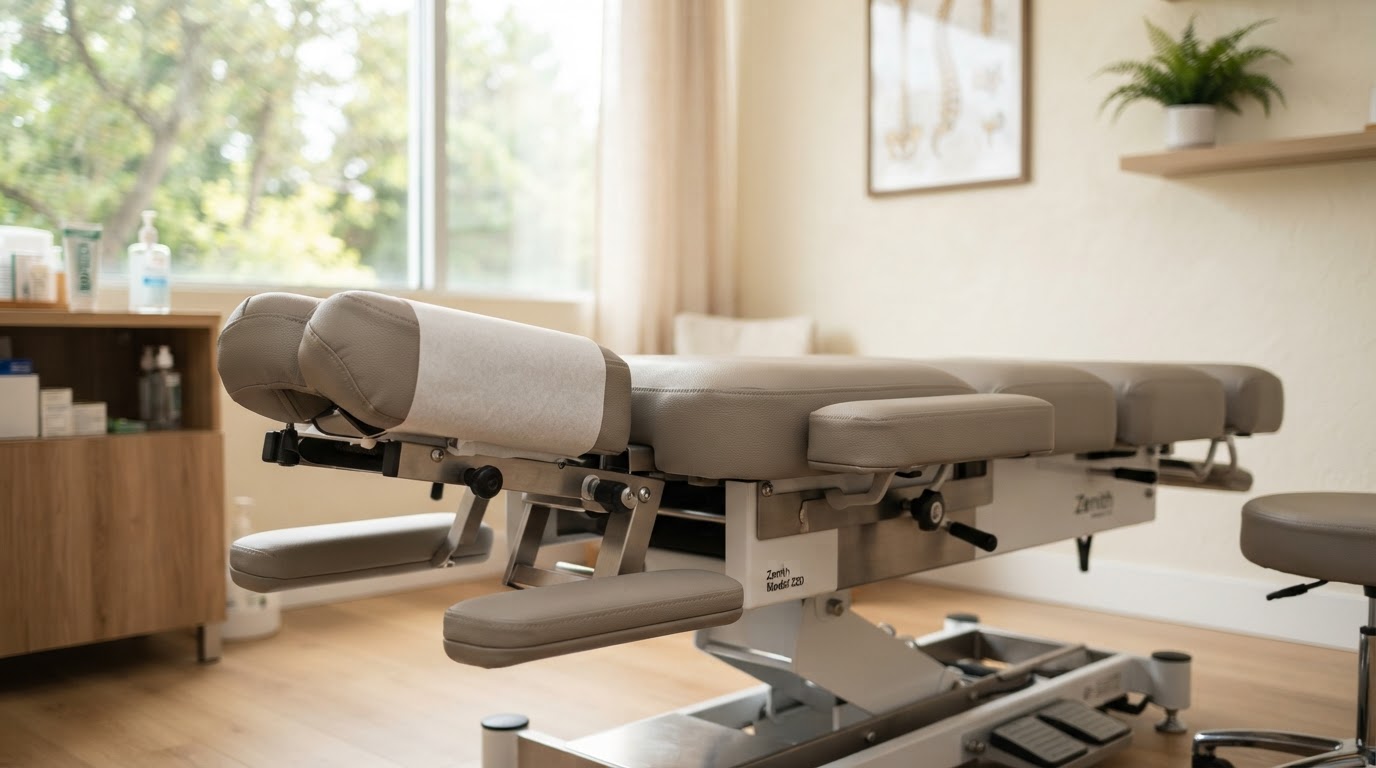
What to expect at Elevate Sport and Spine
Your first visit runs 30 to 45 minutes. For adults with scoliosis, the focus is usually back pain, stiffness and staying active; for teens, it's measuring, monitoring and keeping them in their sports. A parent or guardian stays with any patient under 18. More on your first visit.
Is chiropractic care safe with scoliosis?
Gentle chiropractic care and exercise are considered low risk for people with scoliosis after a proper exam. Techniques are adapted to the curve, age and comfort; Activator and drop table adjustments are options for patients who need a lighter approach. The important safety point is not delaying specialist care when a curve calls for it.
Scoliosis care in Kingsport
We see teens referred after school screenings, young athletes with a known curve who want to stay in their sport, and adults with long-standing scoliosis and back pain. Dr. Douglas works alongside your child's pediatrician or orthopedic specialist rather than in place of them.
Common Questions
Clinical Sources & Guidelines
- Weinstein SL, Dolan LA, Wright JG, Dobbs MB. Effects of bracing in adolescents with idiopathic scoliosis. New England Journal of Medicine. 2013;369(16):1512-1521.
- Scoliosis Research Society. Adolescent idiopathic scoliosis: patient information. srs.org.
Ready to be seen?
Call 423-239-9122 or book online. We don't take walk-ins, but most new patients are seen within a week, and we check your insurance benefits before your first visit.