
Chiropractor for Herniated Disc in Kingsport, TN
Go to the ER or call 911 for loss of bladder or bowel control, numbness in the groin or inner thighs, quickly worsening leg weakness, or symptoms in both legs. These can mean a large disc is compressing the nerves at the base of the spine (cauda equina syndrome), which needs emergency surgery.
What causes a herniated disc?
- •Normal age-related changes that make discs drier and less flexible
- •Lifting and twisting, especially repeated bending under load
- •Long hours of sitting or driving
- •Smoking, which reduces the disc's blood supply and nutrition
- •Family history, which plays a bigger role than most people expect
Often there's no single event; the disc gives way during something ordinary, like bending to pick up a sock.
What your MRI report means
MRI reports use terms that sound alarming but are often normal findings. Disc bulges and degeneration show up on MRI in a large share of adults who have no pain at all, and the share rises with age. What matters is whether the finding matches your symptoms and exam.
| Term on the report | What it means |
|---|---|
| Disc bulge | The disc extends slightly past its normal edge, broadly. Very common and often painless. |
| Protrusion | A focal bulge where the base is wider than the part sticking out. |
| Extrusion | Disc material pushed out further, narrower at the base than the tip. These often shrink over time. |
| Sequestration | A fragment has separated from the disc. Often reabsorbs, but may need a surgical opinion. |
| Nerve root contact or compression | The disc is touching or pressing the nerve. Matters most when it matches your leg or arm symptoms. |
Bring your MRI report to your first visit; you don't need one to come in.
How chiropractic care may help
The goal is to calm the irritated nerve and get you moving with less pain while the disc settles. Care may include:
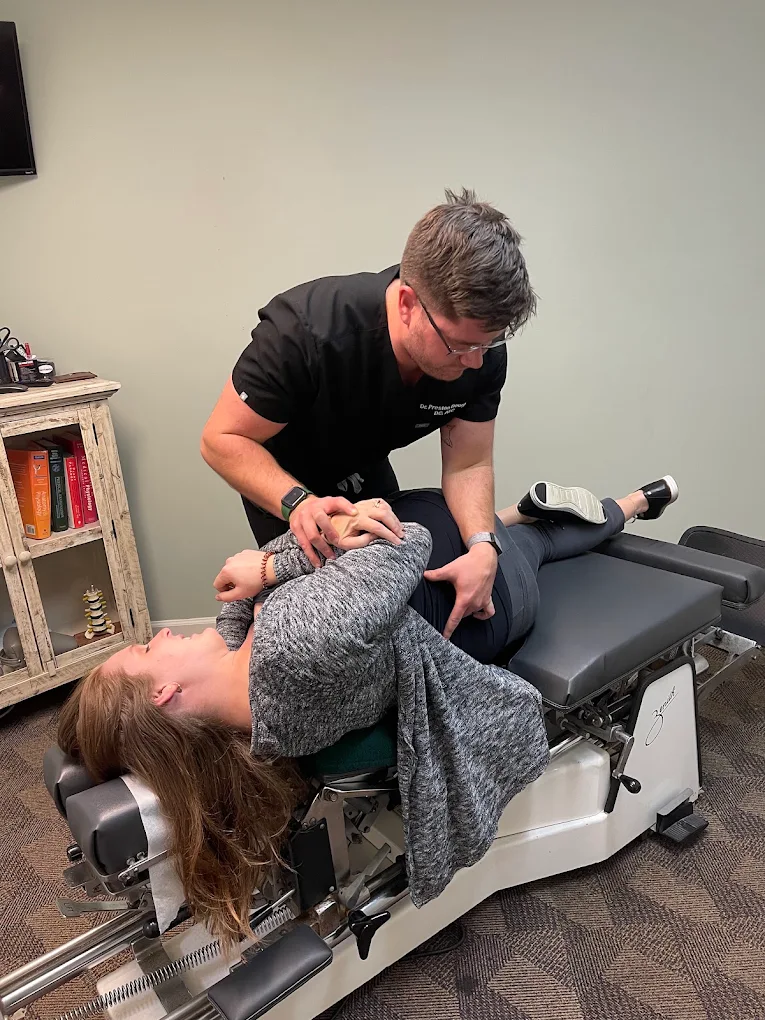
- •Gentle chiropractic adjustments, Thompson drop table or Activator techniques, chosen to avoid aggravating the disc
- •Positions and movements that ease leg or arm symptoms, practiced at home
- •Soft tissue work for guarded back and hip muscles
- •Graded corrective exercise to build trunk strength once the flare settles
Nobody can "pop a disc back in," and we won't promise to. Results vary, and Dr. Douglas tracks your nerve signs closely.
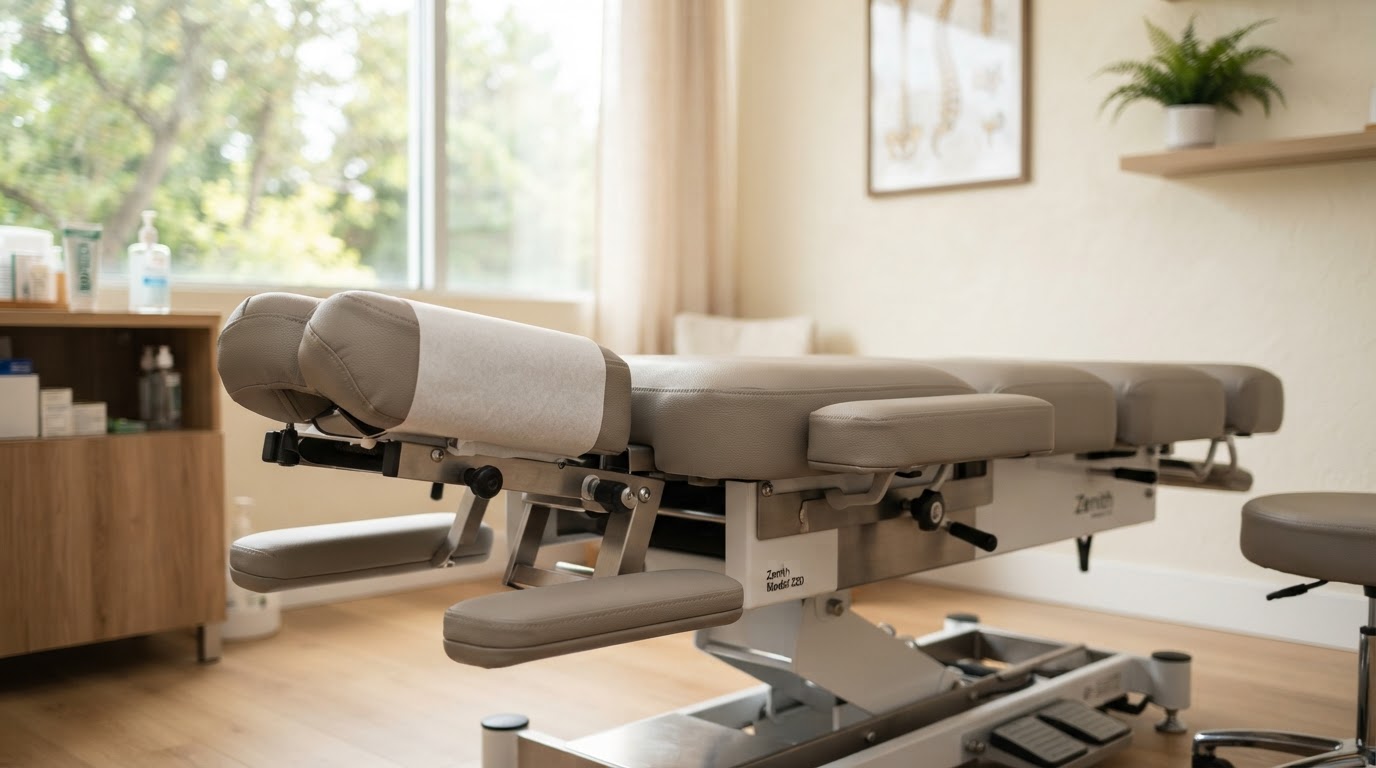
What to expect at Elevate Sport and Spine
Your first visit runs 30 to 45 minutes and includes a full nerve exam: strength, reflexes, sensation and nerve tension tests, plus spinal movement. X-rays are available on site when needed; X-rays don't show discs, so MRI is recommended when symptoms are severe, getting worse, or not improving. Significant or worsening weakness gets an early referral for a surgical opinion. More on your first visit.
Is chiropractic care safe with a herniated disc?
For most people with a disc herniation and no red flags, conservative chiropractic care is considered reasonable and low risk after a careful exam. Forceful techniques are avoided while a disc is acutely irritated. Tell us right away if leg or arm symptoms spread, numbness grows, or weakness appears.
Herniated disc care in Kingsport
Many of our disc patients lift for work, sit for long hours, or train hard. Dr. Douglas's athletic training background shapes the later stage of care: rebuilding strength and confidence so you can get back to lifting your kids, your work or your sport.
Common Questions
Clinical Sources & Guidelines
- Chiu CC, Chuang TY, Chang KH, et al. The probability of spontaneous regression of lumbar herniated disc: a systematic review. Clinical Rehabilitation. 2015;29(2):184-195.
- Brinjikji W, Luetmer PH, Comstock B, et al. Systematic literature review of imaging features of spinal degeneration in asymptomatic populations. American Journal of Neuroradiology. 2015;36(4):811-816.
Ready to be seen?
Call 423-239-9122 or book online. We don't take walk-ins, but most new patients are seen within a week, and we check your insurance benefits before your first visit.