
Chiropractic Techniques at Elevate Sport and Spine
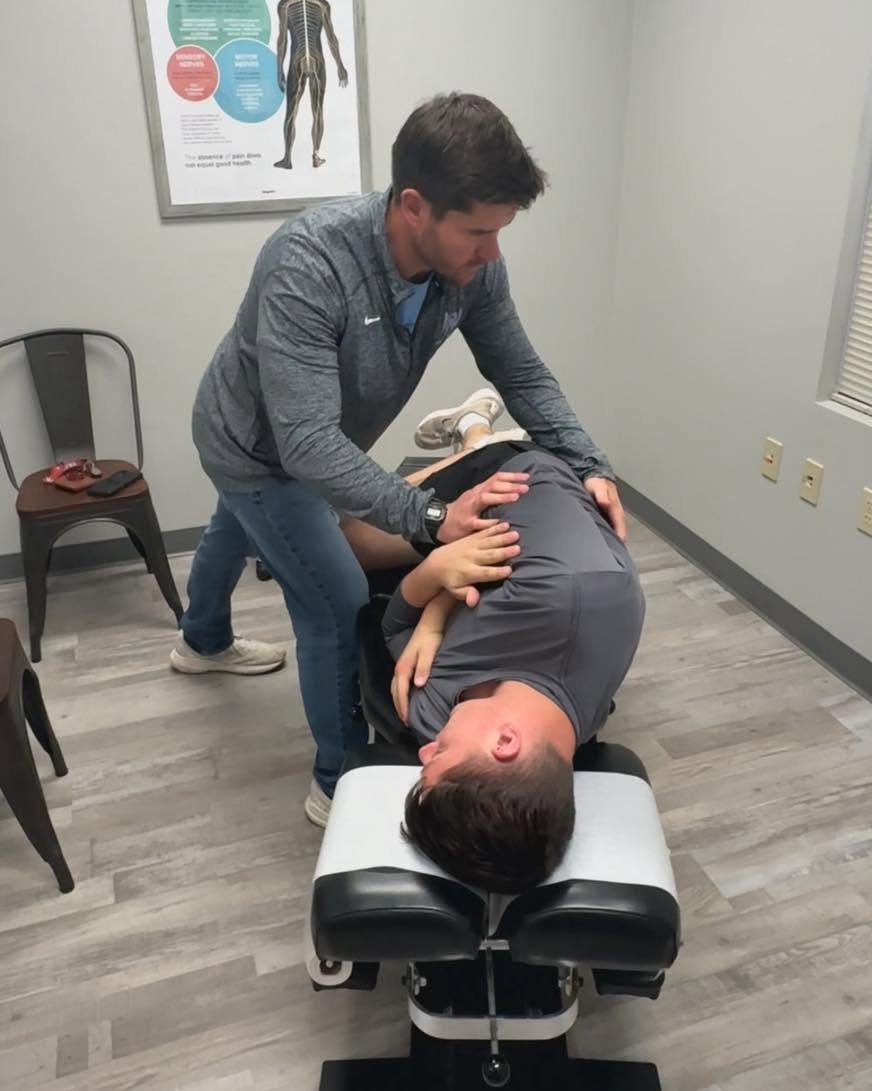
Adjusting techniques
Diversified technique
The most widely taught and used chiropractic technique. Dr. Douglas uses his hands to deliver a quick, precise, low-amplitude thrust to a stiff joint, often with an audible pop. It's his primary technique and suits most adults and athletes. Used for back pain, neck pain, headaches and mid-back stiffness.
Activator Method
A small handheld instrument delivers a light, very fast impulse to a specific spot. There's no twisting or popping, which makes it a good option for people who are nervous about manual adjustments, older adults, patients with reduced bone density, and sensitive areas like the neck and extremities.
Arthrostim
An instrument that delivers a rapid series of gentle percussive impulses. It's used to mobilize stiff joints and relax tight muscles with very little force, and many patients find it comfortable when they're in a lot of pain.
Thompson drop table
Sections of the treatment table are raised slightly and then drop a fraction of an inch as the adjustment is delivered. The drop does much of the work, so less force is needed. It's especially useful for the low back and pelvis, for pregnant patients, and for people with an irritated disc or sciatica.
Soft tissue techniques
Active Release Techniques (ART)
Dr. Douglas is ART (Active Release Techniques) certified. ART is a hands-on, movement based soft tissue technique in which tension and pressure are applied to a muscle while it is taken through its range of motion. It is used to break up scar tissue and adhesions in muscles, tendons and ligaments, and is commonly used for overuse injuries such as tennis elbow, shoulder impingement, plantar fasciitis and tight hip muscles.
Instrument-assisted soft tissue mobilization (IASTM)
Smooth-edged tools are glided along muscles and tendons to address tight, restricted tissue. It's often used for tendon problems like tennis elbow and plantar fasciitis, and for tight muscles around the shoulder, hip and low back.
Dry needling
Thin, solid needles are placed into trigger points to release tight, painful muscle. Dr. Douglas completed 54 hours of hands-on training through the American Academy of Manipulative Therapy. Dry needling.
Corrective exercise
Exercises chosen from your exam, taught in the office and progressed over time, so the results of hands-on care last. Corrective exercise.
Which technique is right for me?
| If you… | Dr. Douglas may favor |
|---|---|
| Are an athlete or active adult with joint stiffness | Diversified |
| Don't want the pop, or are older or have low bone density | Activator, Arthrostim |
| Are pregnant, or have low back or pelvic pain | Thompson drop table |
| Have an irritated disc or nerve | Drop table, Activator, gentle mobilization |
| Have tight, knotted muscles or a stubborn tendon | IASTM, dry needling |
You can always ask for a different approach. Most visits combine a few of these.
Common Questions
Ready to be seen?
Call 423-239-9122 or book online. We don't take walk-ins, but most new patients are seen within a week, and we check your insurance benefits before your first visit.